spectral colorimetry, matrix-free
in this article we show how to render an image from camera rgb without using matrices.
this is highly related to input device colour management, and
the vkdt mkssf tool which creates plausible spectral sensitivity functions for a camera
from either matrices in a dcp profile or colour checker calibration shots.
image formation in a camera device
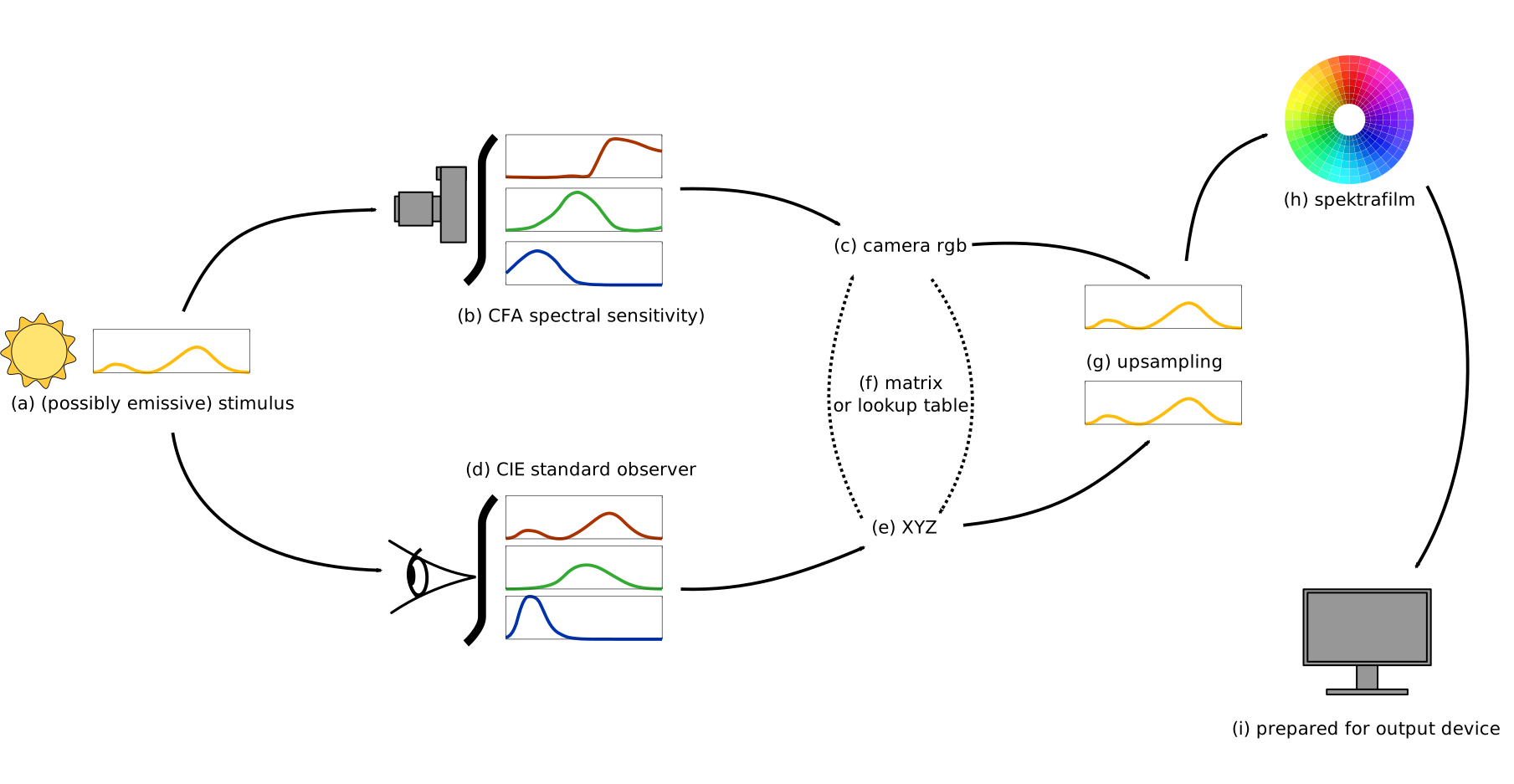
rendering an image from a photographic measurement works in several steps. the source stimulus in the scene (a) is imaged through a device (b) with certain spectral sensitivity in the colour filter array (CFA). this results in tristimulus values, three numbers representing the stimulus in camera rgb.
this will in general be somewhat different to imaging the same stimulus through a human observer (d). in particular, due to the reduction in dimensionality, a set of spectra will collapse to the same tristimulus values both in camera rgb (c) and in observer space (e). unfortunately these aren't the same sets, they both have different metameric failures.
input device transforms (such as the one vkdt's vkdt mkclut generates)
will map camera rgb to XYZ, but unavoidably collect metameric failure
on the way.
upsampling (g) the tristimulus values reconstructs a credible spectrum from (c) or (e). a side constraint is that the upsampled spectrum is metameric with the real stimulus (a), under the camera CFA (b) or the CIE observer (d). this spectrum can be used for more accurate spectral processing.
spektrafilm
such spectral processing is for instance the spektrafilm film simulation,
implemented in the filmsim module. the spectral upsampling is performed
within the module, and it requires a look up table to do this computation. the
lut is supplied as input connector spectra and contains a mapping xy → c0 c1 c2 c3, where c* are coefficients for a function space representing smooth
emissive spectra (sigmoidal + scale).
the process is normally done by daisy-chaining input device transform (IDT in
the colour module) and then upsampling from the observer space. this is nice
and general, but inherits the problems of the IDT:
- out of gamut values for matrix transforms
- metameric failure is of the camera CFA and of the transform to observer coordinates XYZ.
taking a picture will always take the path (a)→(b)→(c). there are multiple
paths from camera rgb (c) to upsampled spectrum (g). clearly the path
→(f)→(e)→(g)→ collects more error than →(g)→. this is regardless of how
accurate we design (f), due to the double metameric failure involved here.
also, (g) will work on the correct assumptions when trying to come up with a
plausible spectrum similar to (a).
let's first look at our options for the IDT (f).
input device transform recap
mapping camera rgb to observer space is a necessary step so subsequent tools as well as the display colour management can work on some known and camera-indepenent tristimulus space. most often, this is done by using a simple 3x3 matrix transform from camera rgb to XYZ. this matrix can for instance be found by fitting the matrix coefficients to a picture of a colour checker target with known XYZ reflectances, taken under known illuminant. this is a smooth mapping with no additional metameric failure introduced (all camera rgb values will receive their individual XYZ output values). unfortunately it mostly works for moderate chromaticity.
consider this image under blue led illumination, with the standard D65 matrix applied as IDT:
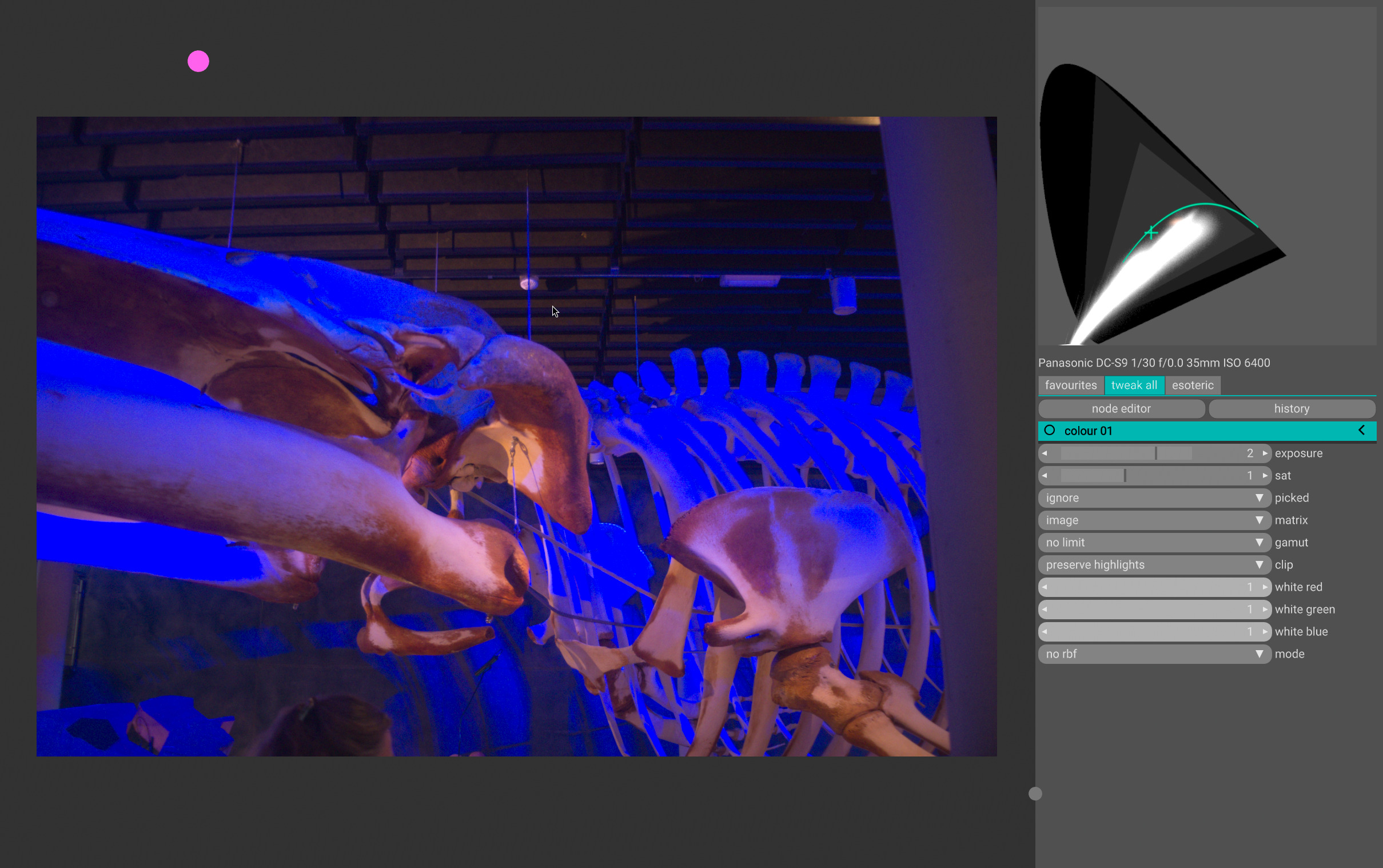
you'll notice how the more extreme blues are pushed way out of spectral locus in the CIE xy chromaticity chart in the top right corner.
we can try to white balance this with more matrix math (CAT16):
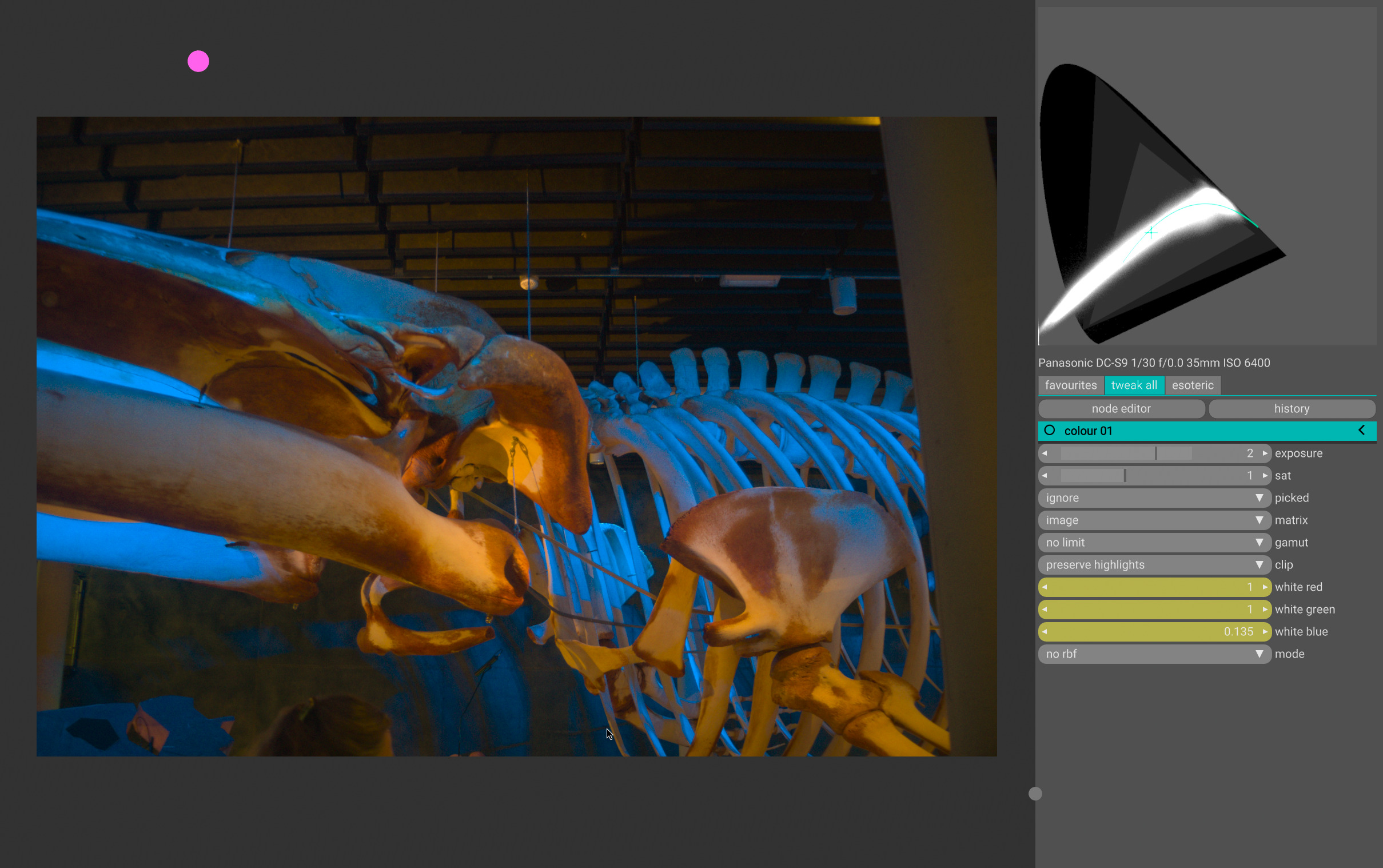
with, let's say, mediocre success. the outcome: high-chroma values will be clamped and result in flat, constant-colour, even noise-free regions. very distracting.
note that the input data from camera was good before we applied the matrix. here is the camera rgb buffer re-interpreted as bt2020:
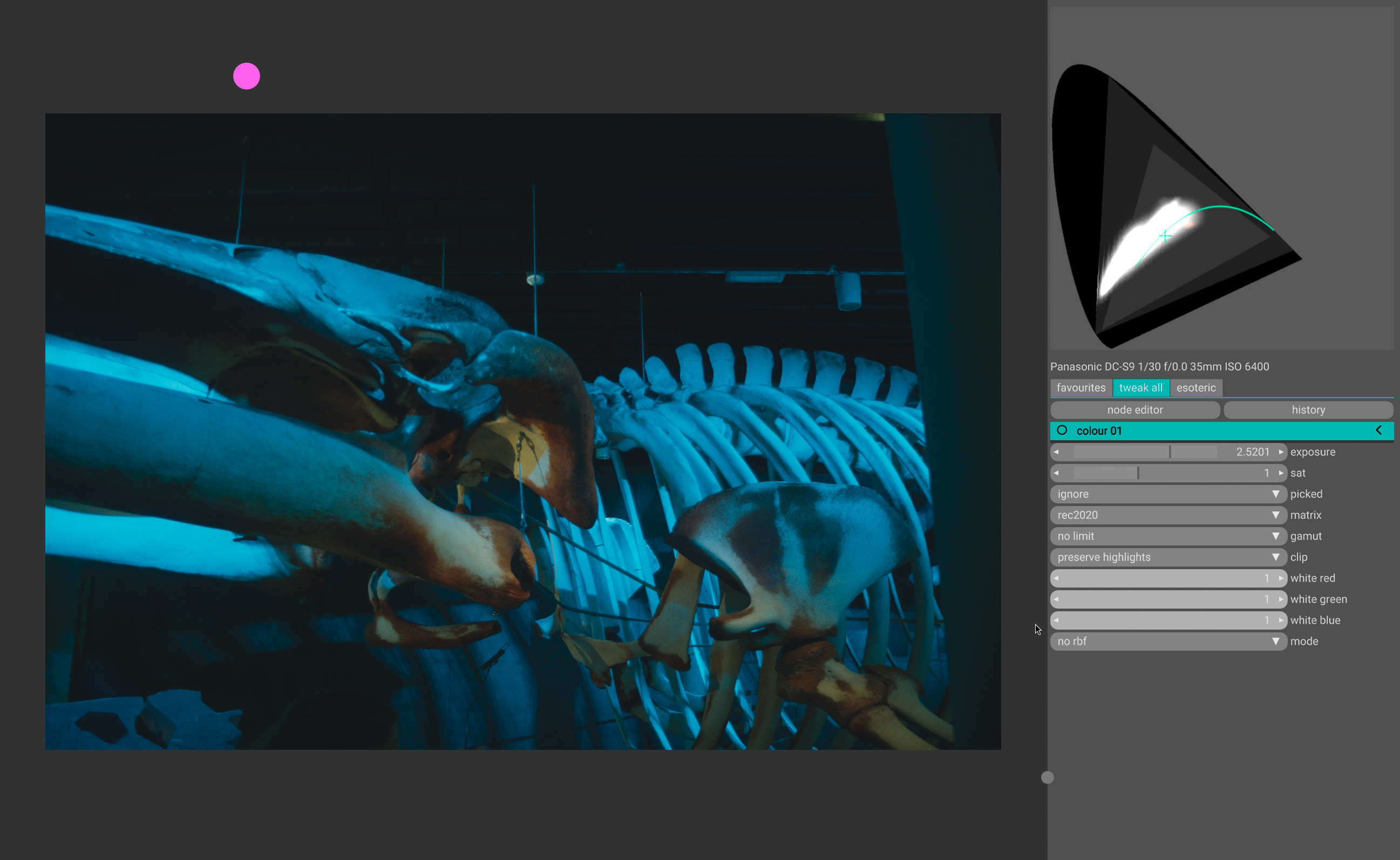
this means we actively broke the data during IDT. the obvious wishlist: all values inside spectral locus! white balance without destructive matrices!
matrix as input device transform
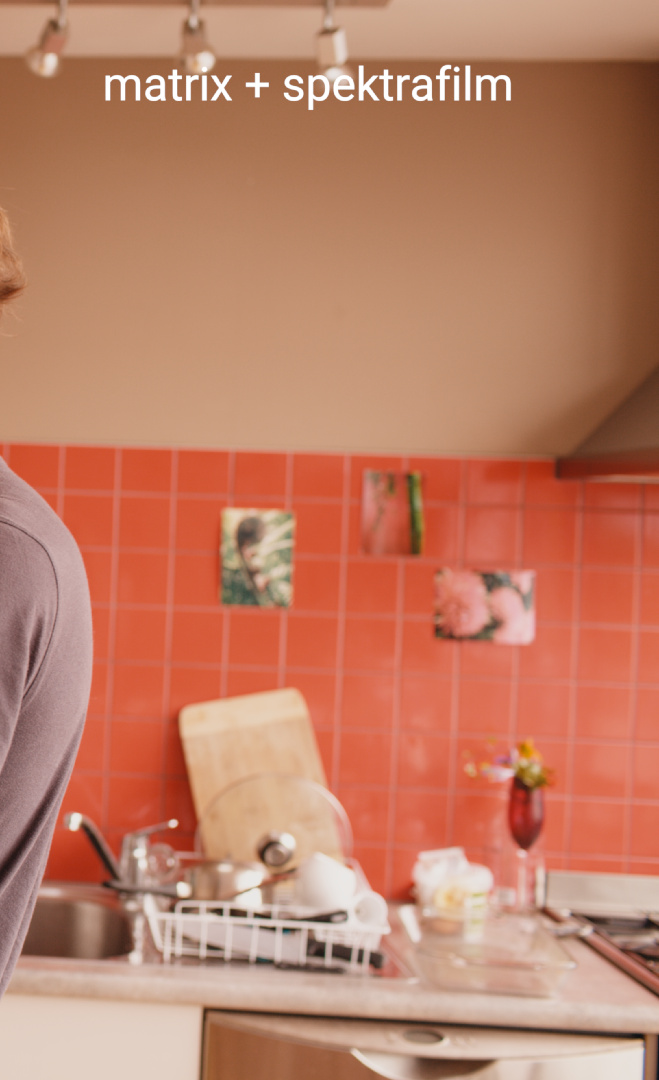
this is the "matrix" approach in the results below. since spectral sensitivity data is not always available, this is the default code path today.
graph wiring:
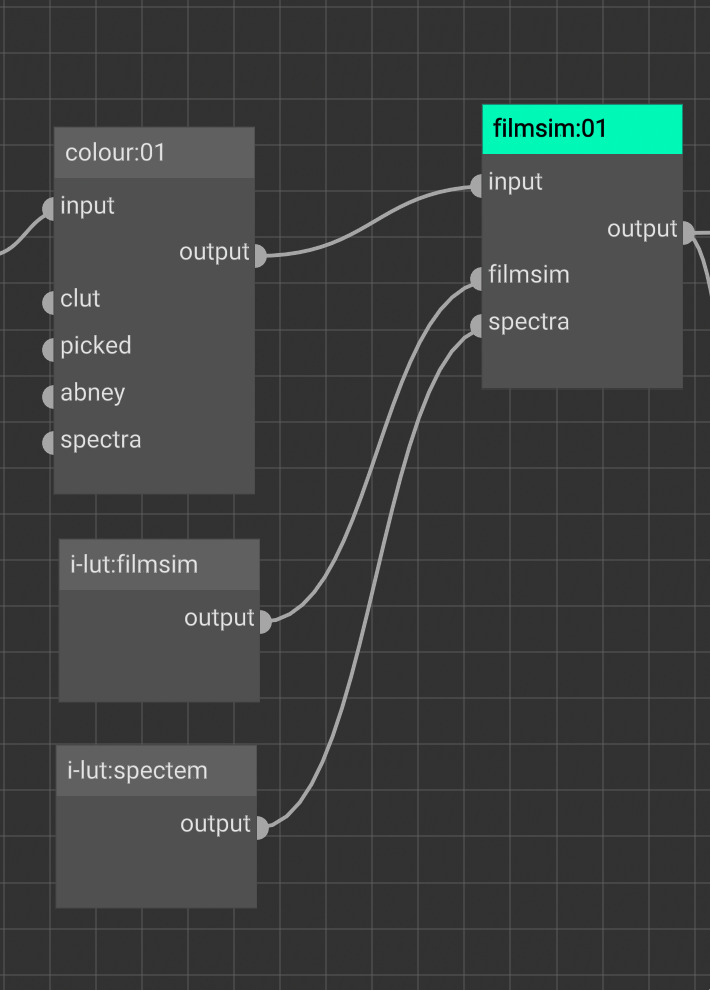
parameters: set
colour:01:matrix to image
filmsim:01:input to bt2020
inputs: connect
spectra-em.lut to filmsim:01:spectra
the spektrafilm upsampling table is extended smoothly to imaginary colours (negative spectral energy). it does something for extreme chroma, but likely collapses some of these to very similar spectra, much like clamping.
colour lut from spectral sensitivity functions as input device transform
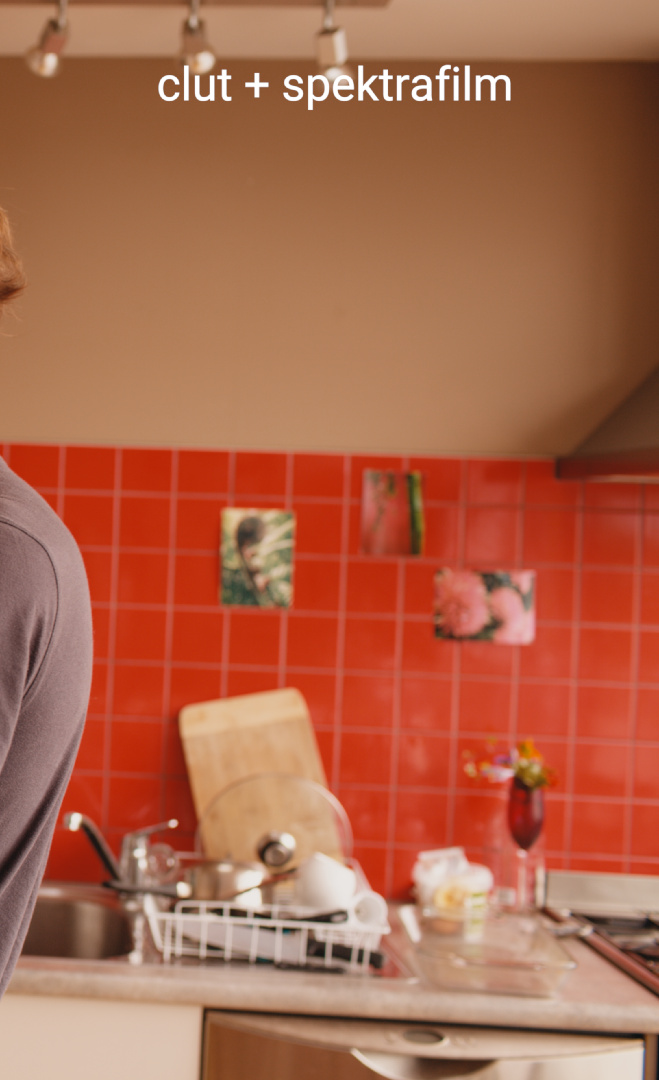
this is the "clut" approach in the results section.
consider the Canon EOS 5D Mark II's response to MacAdam style box spectra:
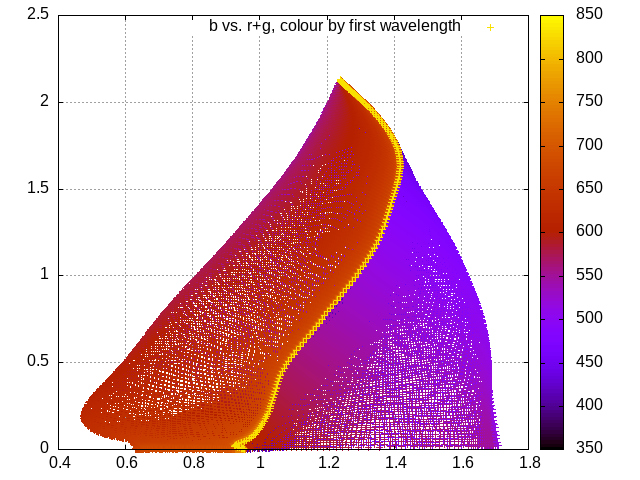
this plots camera rgb r+g as x axis, and r+g+b (some measure of overall spectral energy) as y axis. for better display, the colour is the rising-edge wavelength of the box spectra.
especially see the red bulge to the left where a chromaticity coordinate of (r,g) (x-axis) can be reached by two different box spectra (points on the y-axis above each other).
this particular kind of metameric failure we don't have with the CIE observer, and it results in some ambiguity in the mapping from camera rgb to cie observer space.
note that all conventionally used colour spaces (xyz, srgb, prophotorgb, adobergb, bt2020, etc..) are metameric to the observer, i.e. a simple linear transform away (multiply a matrix, and that is the definition of the transform, no errors introduced, no additional metamers collapsed).
the colour lookup table (clut) approach is accurate where it is (and disregards possible other metamers completely). it maps each camera rgb coordinate to exactly one XYZ coordinate, where both may have been the result of the same spectrum as stimulus.
assumption: need to know ssf
approximation: assume a certain function space of likely spectra that go with observer XYZ coordinates.
graph wiring remains much as above:
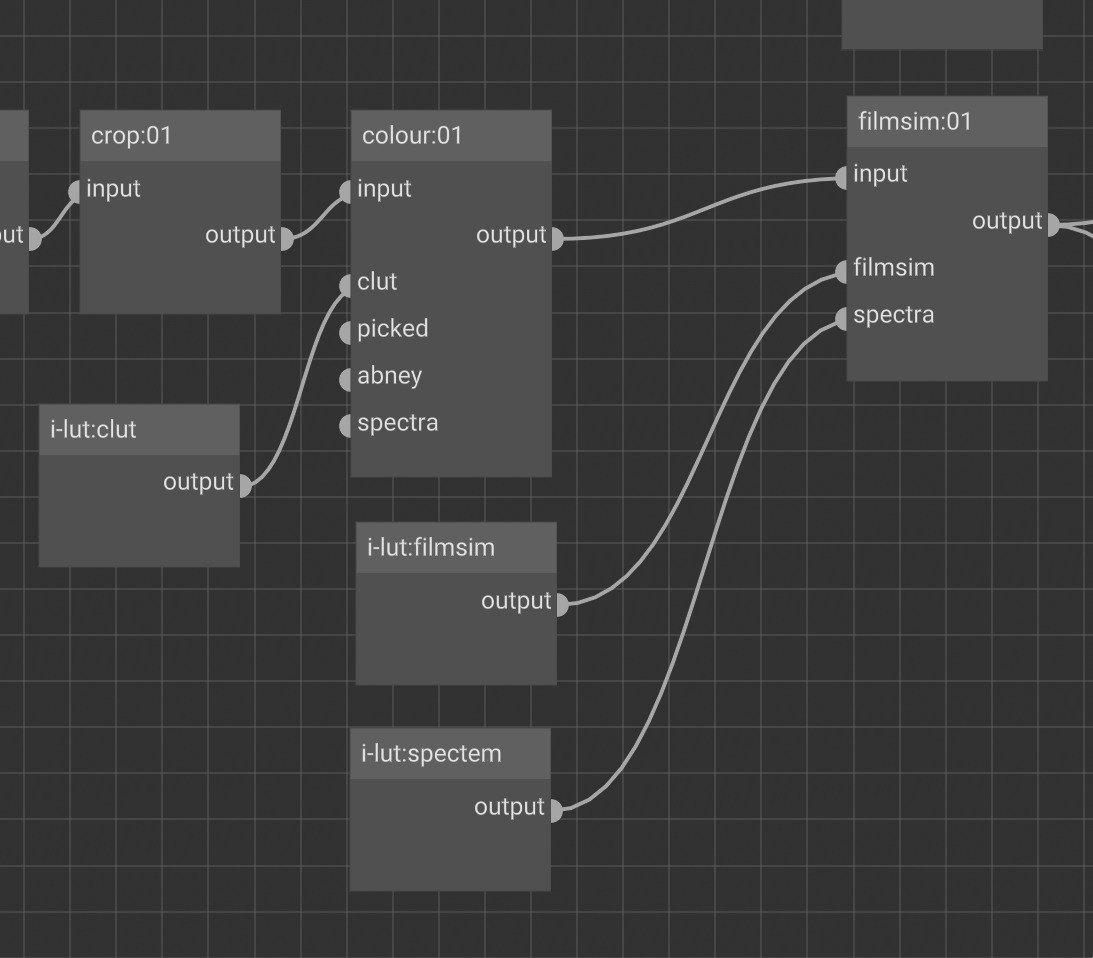
set
colour:01:matrix to clut
filmsim:01:input to bt2020
inputs: connect
spectra-em.lut to filmsim:01:spectra
${maker} ${model}.lut to colour:01:clut
(see the clut.pst preset)
use the clut.pst preset and a custom .lut file as input to the colour
module, see docs about input device transform.
no out of gamut, but suffer metameric failure twice by daisy-chaining
spectrum to camera rgb to observer space.
direct spectral upsampling of camera rgb
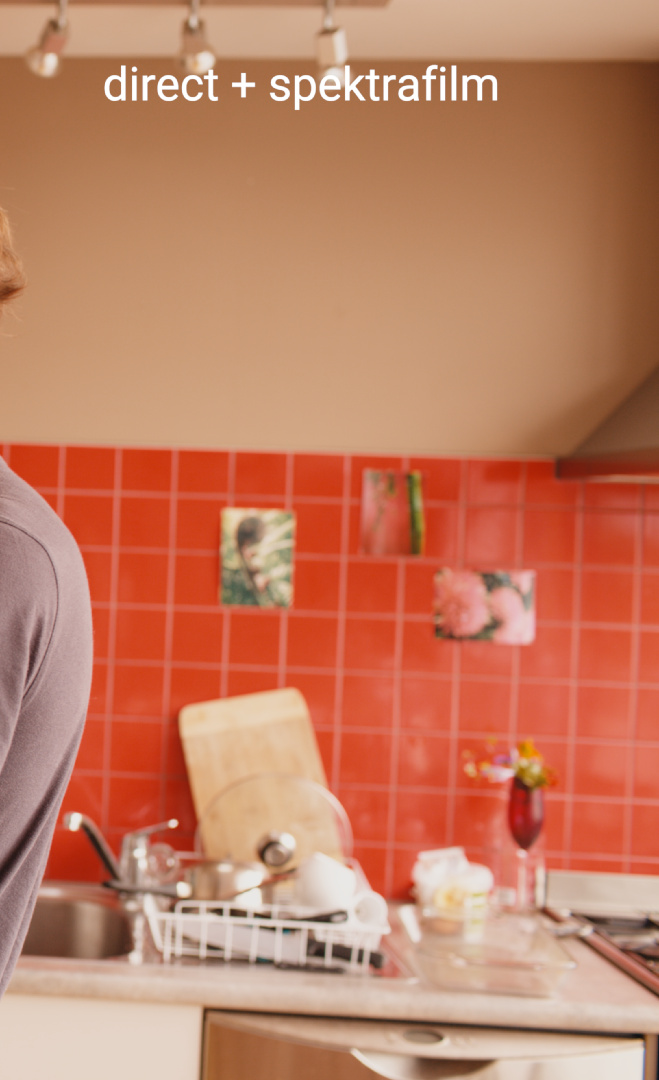
this is the "direct" approach.
graph wiring:
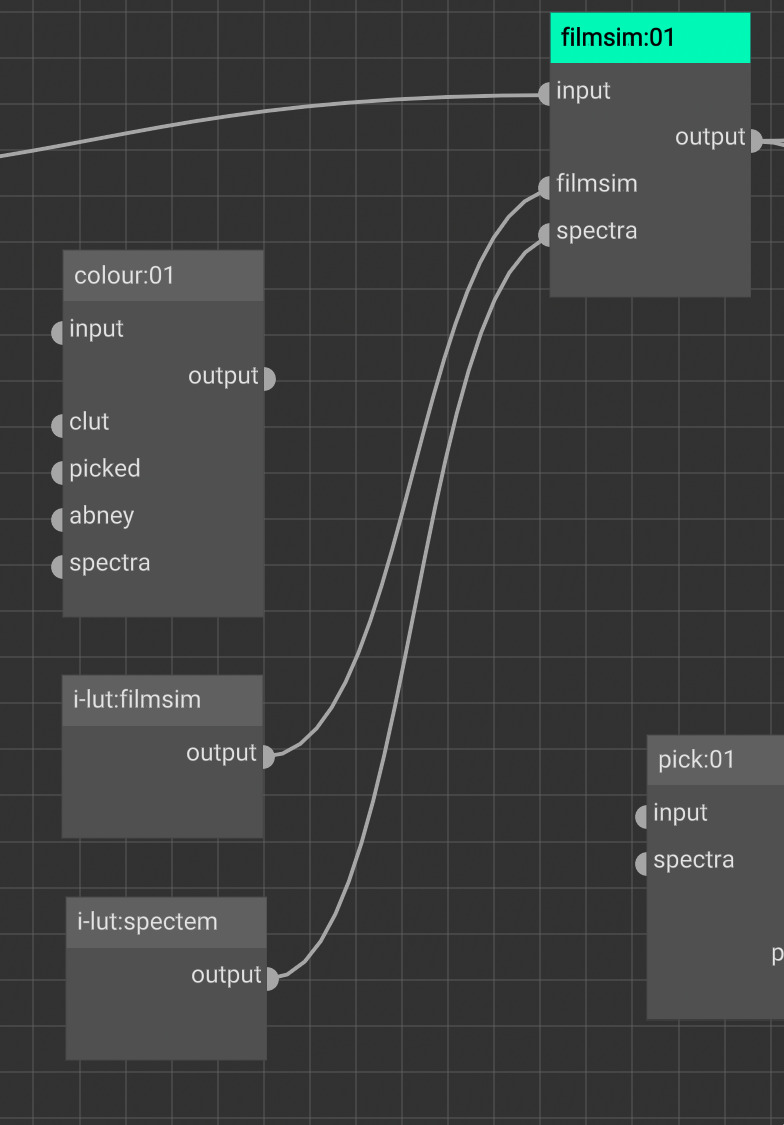
i.e. no colour module in the loop
wire a spectral upsampling lut to the filmsim module that is created specifically for your camera:
cd src/
./mkspectra tools/clut/data/Canon_EOS_5D_Mark_II
and if you don't have an ssf, dream one up for instance via vkdt mkssf.
set
filmsim:01:input to camera rgb
and connect
${maker} ${model}-em.lut to filmsim:01:spectra
(see the spektrafilm-direct.pst preset)
this approach also suffers from metameric failure, but only once and only the unavoidable one by the camera. no out of gamut madness.
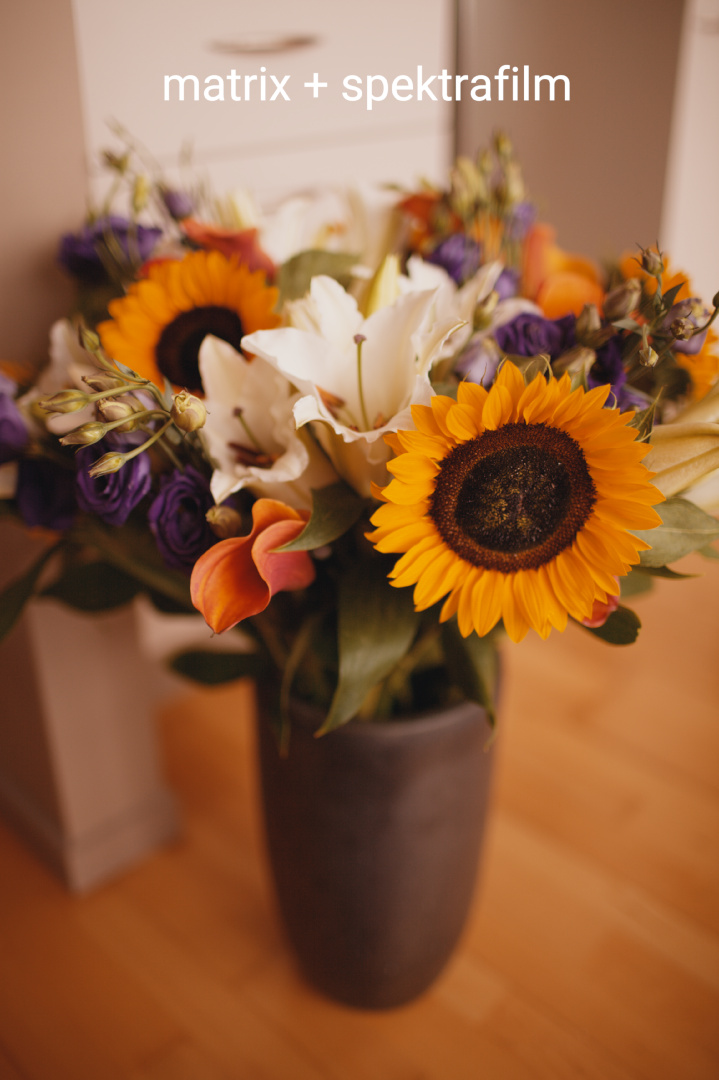
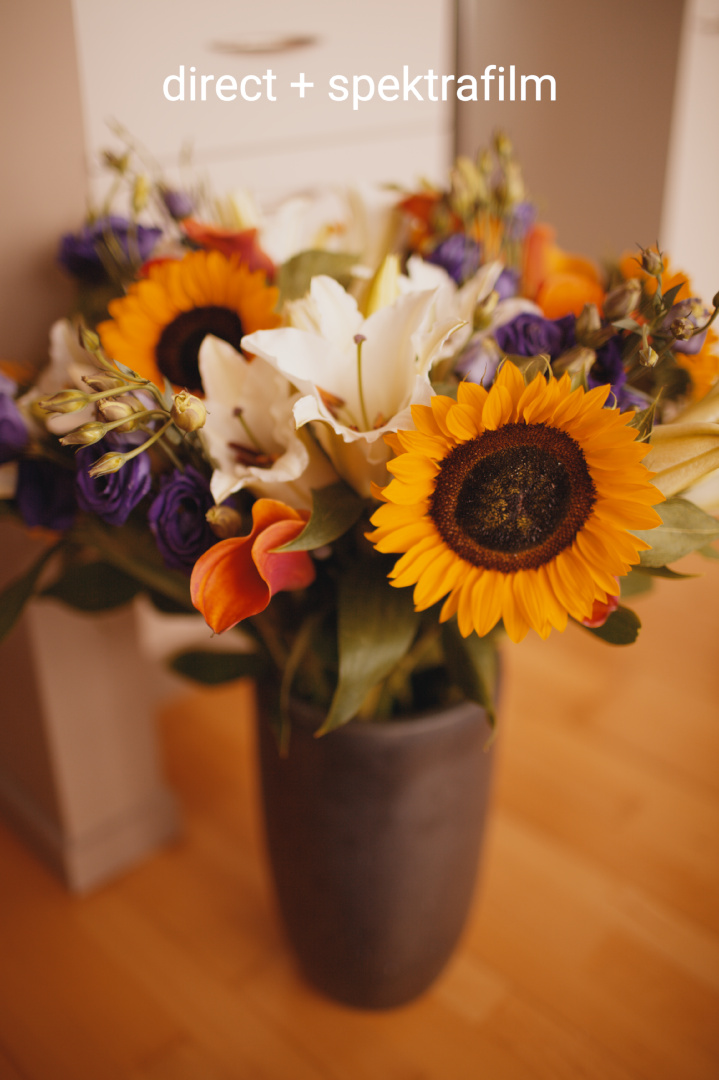
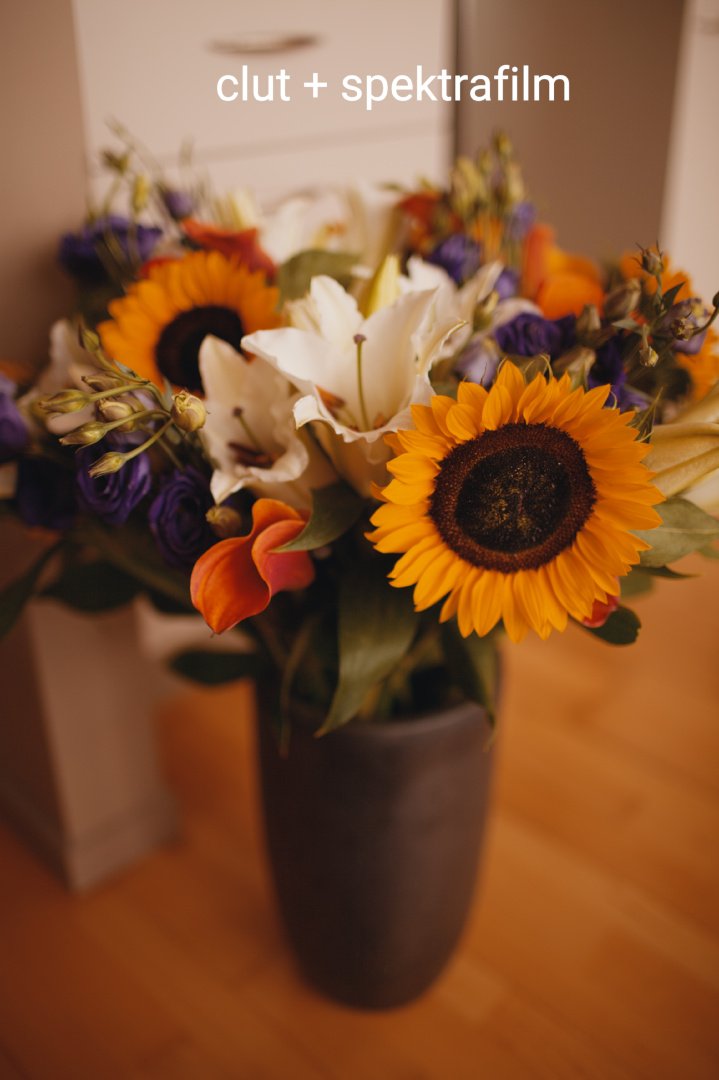
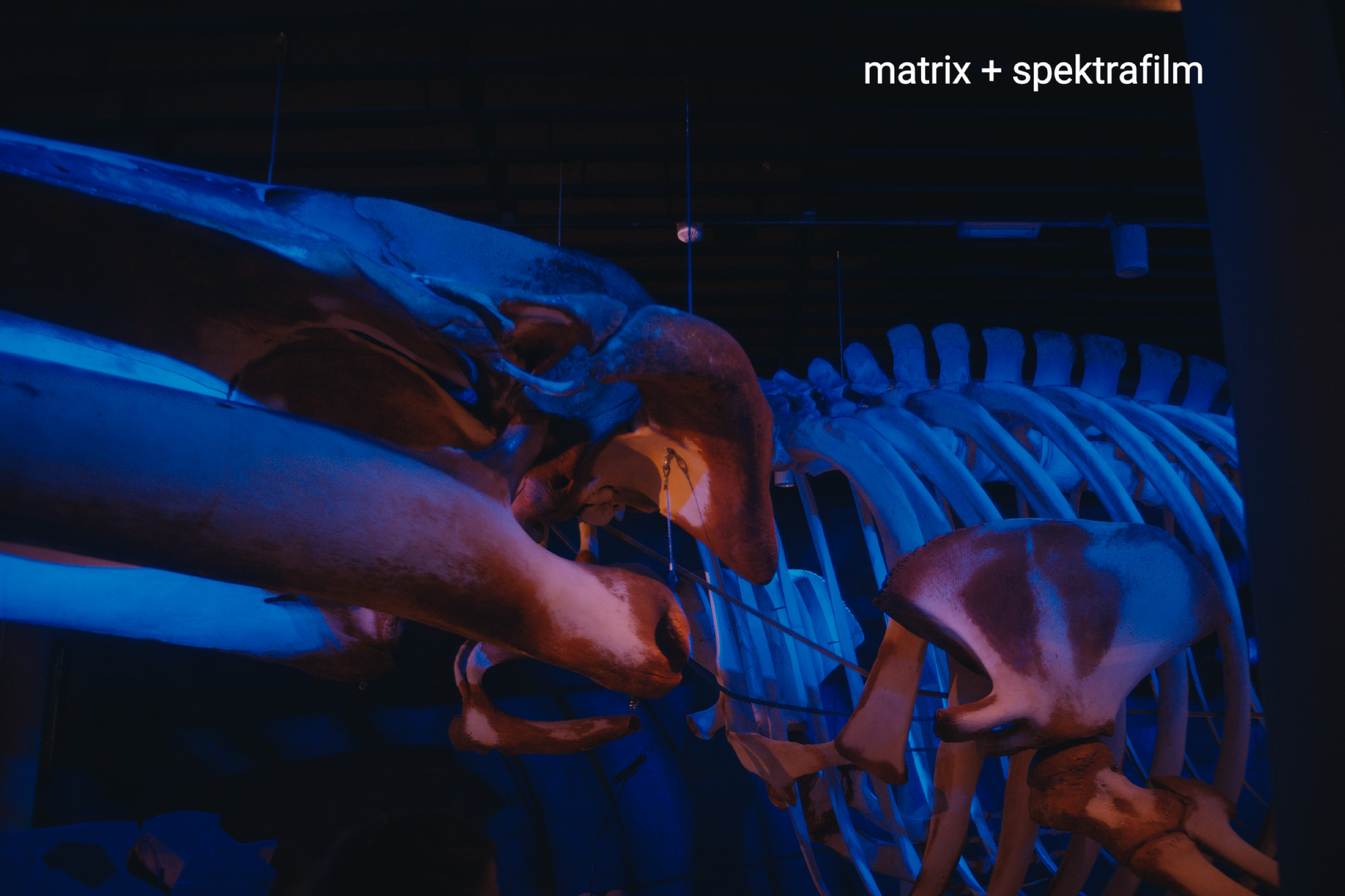
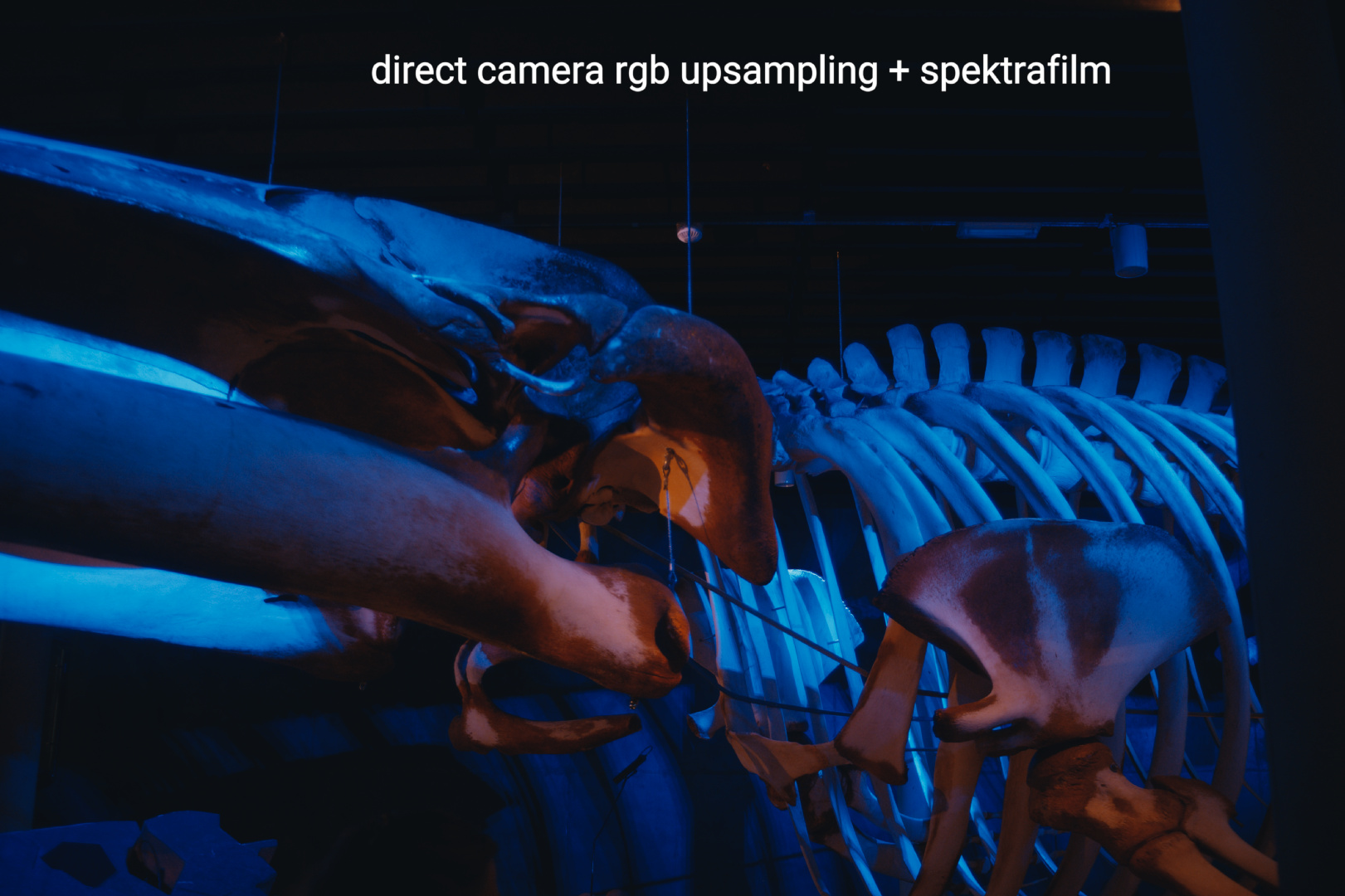
comparing the three methods
Canon EOS 5D Mark II, measured ssf:
 |
 |
 |
 |
 |
 |
 |
 |
 |
Panasonic DC-S9, ssf guessed by mkssf:
 |
 |
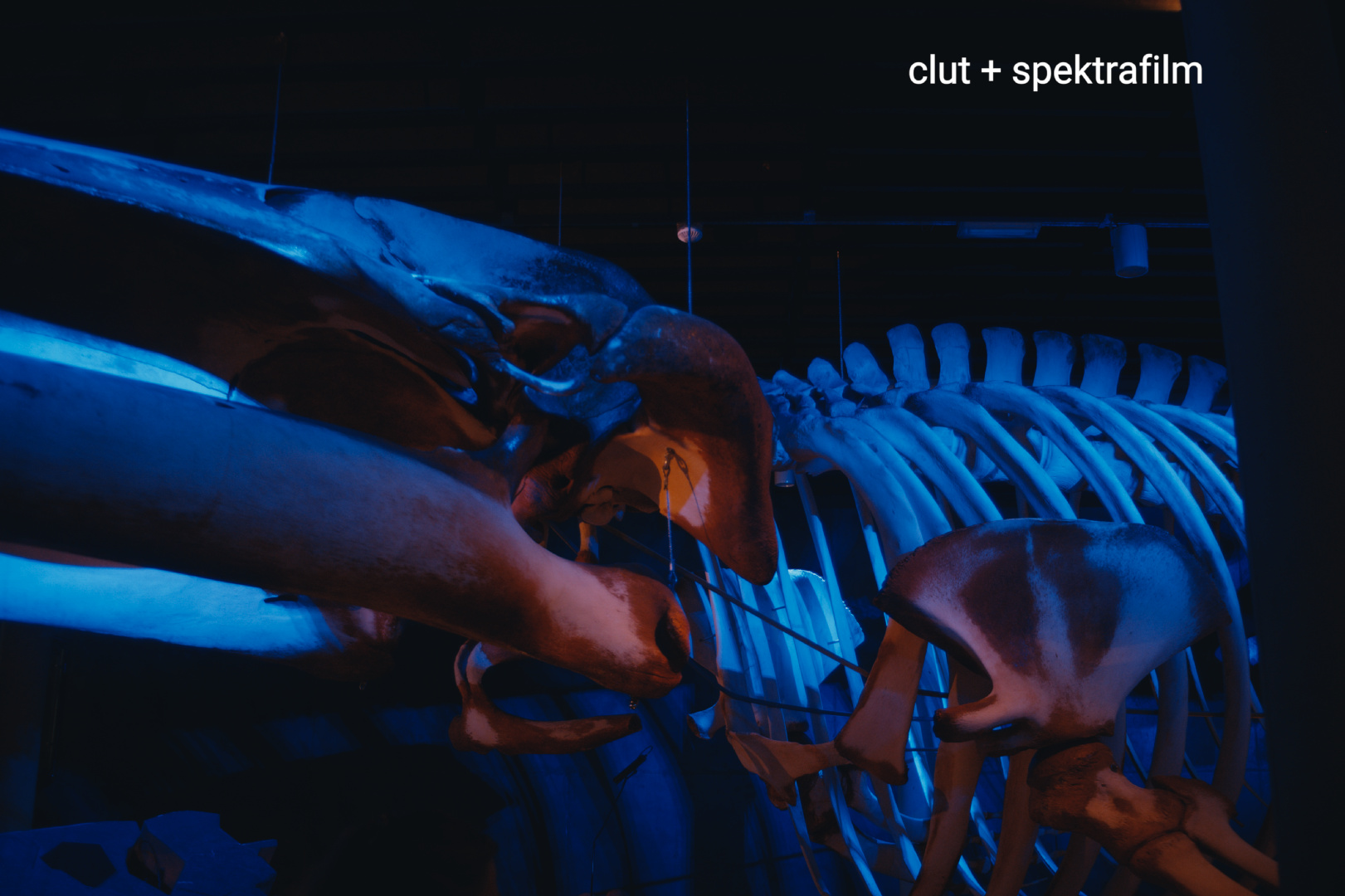 |
setup cheat sheet
matrix
denoise->colour->filmsimparam:colour:matrix:imageparam:filmsim:input:bt2020spectra-em.lut->filmsim
clut
denoise->colour->filmsimparam:colour:matrix:clutparam:filmsim:input:bt2020spectra-em.lut->filmsim- lut specific to camera ->
colour
direct
denoise->filmsimparam:filmsim:input:camera rgb- spectra lut specific to camera model ->
filmsim